“One of the first conditions of happiness is that the link between Man and Nature shall not be broken.”– says Leo Tolstoy .When metropolitan souls get congested in their own smoke, they seek escape. Ladakh, or ‘the land of high passes’ is one such breathtaking getaway into the raw beauty of the mountains. Even a few years back, only some travel enthusiasts would think of visiting Ladakh. The situation has changed in recent years, with many visitors arriving each year and thus making tourism the largest industry in this region. Courtesy of harboring famous Bollywood shoots, one can also spot a number of ‘Jab tak hai Jaan’ Maggi stalls and ‘Rancho’ cafeterias across the rough passes. Yet, Ladakh’s appeal lies in its mesmerizing landscape and its cheerful, welcoming inhabitants.
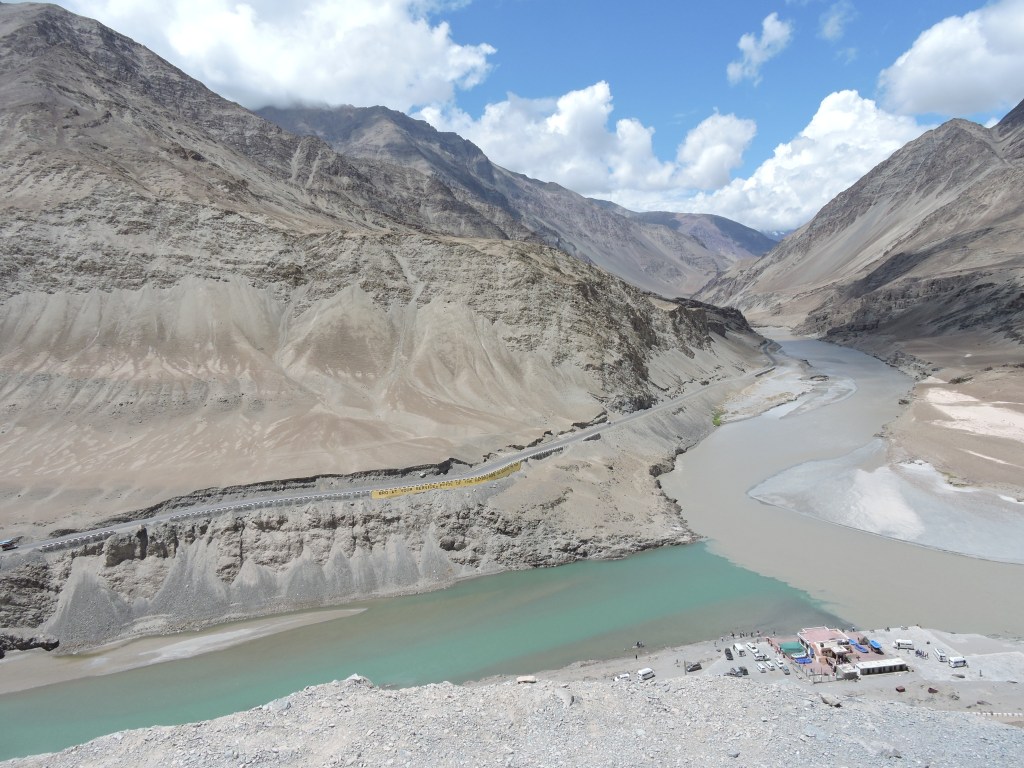
Inside this cold desert, the lofty mountains protect the valley like pillows around a sleeping infant. Clouds tease them with a game of catch-me-if-you-can. Silence here has partnered with the relentless chirping of birds, and the glacial water gurgles as it emerges as streams. One could go on describing the beauty of Ladakh, but what’s impeccable is how humans here are an integral part of nature, – rather than being only its beneficiaries like most of us.
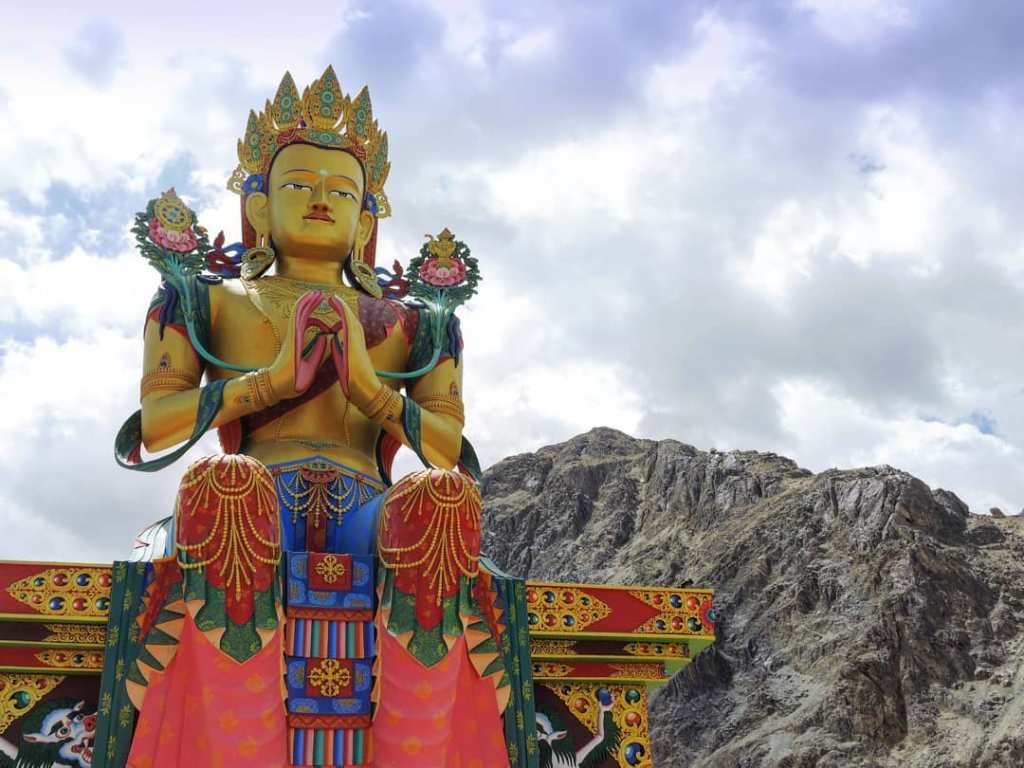
The high-held tricolors fly here as a solid string that connects this corner of the country to the mainland. Amidst the rugged terrain, men and women traverse the steep slopes mostly on foot, often asking tourists for a ride. The only modes of local transport are few plying buses between villages and high-fared cabs. Non-complying autos and rickshaws of plain lands seem like a far-fetched dream in this dreamland. Petrol pumps are few, – with just four of them along the Srinagar-Leh Highway, one in Leh and another in Diskit . Bikers mostly carry extra fuel in their pillion. Ladakh lets its tourists live in the present and distances them from instant status updates, – which is perhaps the only thankful outcome of an otherwise poor mobile network that is restricted to mostly the big towns like Leh. Inside Hunder village of Nubra , – the locals remind us that electricity visits them for only a few hours at night. Hence, most guest houses have installed solar-powered water heaters. The nearest hospital and ATM to this area lies roughly 11 kilometers away, in Diskit,- where a spectacular 106 feet tall statue of Maitreya Buddha sits prominently on top of a hill . The statue was built for the protection of Diskit Village, to prevent further war with Pakistan, and to promote world peace.
With rare precipitation and depleted ground-water levels, Ladakh occasionally suffers from acute water shortage. Guides of ‘Rancho’s School’ tell us about how they have constructed no-water ‘dry-composting’ toilets in their school, that allows natural degradation of human waste. Ironically, Ladakh also bore the brunt of flash floods in 2010 due to heavy overnight rains, which caused huge losses to human life and property. Nevertheless, it has picked up its pieces since then. The devotion of every inhabitant towards cleanliness deserves appreciation. Concerned about plastic pollution, drivers insist that tourists leave their litter inside the car, so that they may dispose it off.
Although Ladakh has become greener and developed than before, there is still a long way to go. Dearth of basic amenities like local transport, banks, educational institutes and health care is conspicuous. The highest mountain passes like Khardung La attract a large number of tourists including many foreigners. Yet, one fails to ignore the scarcity of usable washrooms along these arduous routes. One may also notice the plight of migrant labourers who have left their tropical states in search of employment in this freezing land. They carve roads out of mountains, and clear the snow-laden paths. The same snow which enthralls a tourist perhaps holds no such joy to these migrants, – who light tiny pieces of rejected car-tires for a bare amount of heat.
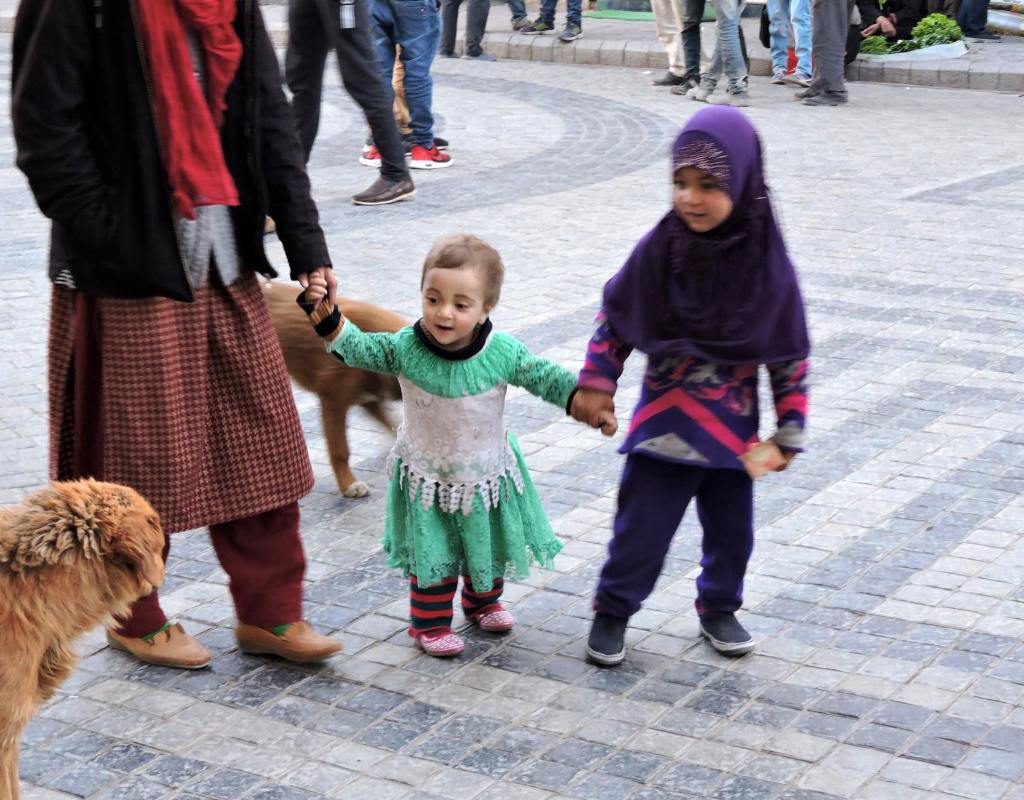
How then are the people of Ladakh living lives that seem far away from our comfortable, air-conditioned, wifi-enabled, ola-ed and uber-ed enclosures? For starters, they are happier and content. As one of the sparsely populated regions of the country, it is heartening to see a higher status of women in Ladakh as compared to other rural parts of India. People here have embraced life and nature in one inseparable form. In spite of their daily hardships, they show utmost love and care to their visitors. One can only pray that development brings ease to their lives without dwindling with their unsullied landscape and simplicity.
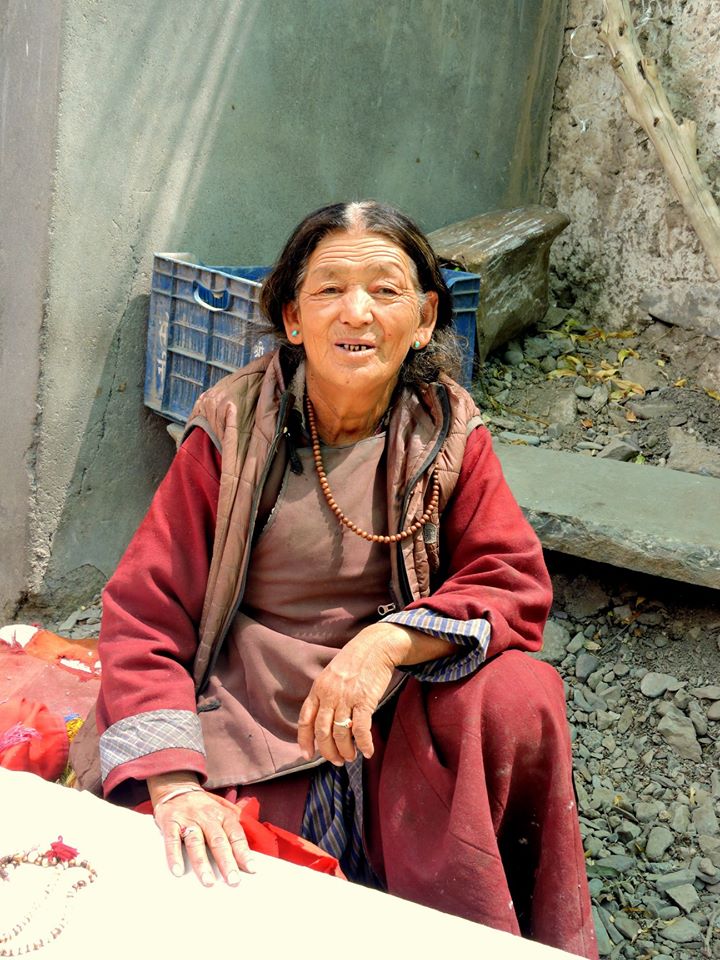
In interior Nubra, as we order breakfast, we are greeted additionally with home-baked ‘khambir’ and butter tea. The innocence in these eyes puts urban complications and insecurities to utter shame. It is as if the whole ecosystem comprising of both its physical and biological elements stands out in its purest form and reminds us that we are a part of it too. It tells us to stop running endlessly, to halt,to breathe, and to exist peacefully in this totality.
🙂
-Abhipsha.

 C'est la vie