The ‘Bong’ Hypocrisy

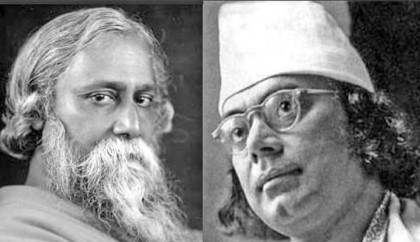
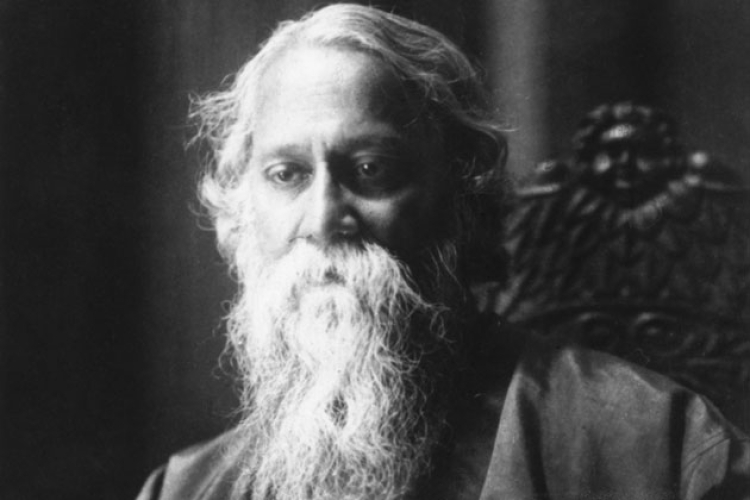
Day before yesterday was the 25th of Boisakh,Tagore’s birthday. Like every year,a man gave everyone the opportunity to showcase their artistry and be content in themselves,- amidst imperfection and perfection. What can be more heartwarming than seeing how a state literally worships a poet year every year,and celebrates his birthday wholeheartedly even in these tough times,- probably being the only community in the world to do so. 

Rabindranath has been attached to almost every Bangali’s childhood,so much so that many of us including me thought of him to be an actual God. Or maybe he was indeed divine,as was his interpretations of everything around. Yet what looked as mere melodious compositions to dance to or occasionally sing in front of guests as a child,- seem to have a much deeper meaning as an adult. One can go through any work of Tagore and realize how he drenched his heart-wrenching personal life experiences and observations into the most delicate,universal and spiritual feelings to connect with the outer world’s positivity. Understanding Tagore probably takes more than a lifetime. But one can try. But do we,really?


The minuscule fraction of readers may do. But for the general public, Tagore seems to be used as a cover-up,a shield to hide the sad and de-cultured reality. The average Bangali like most others celebrates mediocre writing ,drowns oneself in regressive TV serials, and makes crude memes about revered personalities in the name of modernity. The intellectual Bangali finds solace in the kinds of Pink Floyd,reviews and occasionally raves about modern literature and international cinema. While absorbing every era’s art is most desirable,using a personality without making an effort to understand the magnanimity of his work is also a crime most of us are guilty of. 


While 25-e boisakh is a cultural riot in most institutions and households, the rest of the year is spent in popularizing a ‘ social media star’ who intentionally demeans Tagore’s songs by filling them with expletives. And while some may cause months-long nationwide uproar over a character’s representation in a to-be-released period film,we on the other hand exhibit extreme curiousity through films and books by speculating about Tagore’s personal relations, and try our best to instead vilify his body of excellent work.  Tagore isn’t cool,rather he comes occasionally as a facade,and as an opportunity to prove one’s elitism and cultural heritage.


This is most ironic for a man who wanted to break the shell of his elitist upbringing in Kolkata, and instead chose rural bengal for fulfillment of his dream of imparting free-spirited education. And while Bangali remembers him every now and then ( even though almost symbolically ), one may be more heart-broken to see the ignorance outside the state,-and more so because this man defied regionalism, and went out on the streets against the Bengal partition for the cause of his unified country,-with his songs and compassion as weapons.


Maybe he is like most cultural icons everywhere. Remembered occasionally,as per convenience. Maybe his holistic and inclusive attitude doesn’t fit into the outlook or bias of any side to be talked about and shared all year round. So we hide the camouflages of the present day and instead hold him up as a shield,to protect our cultural stereotype. Like the Howrah bridge that stands as a reminiscence of the past, and finds place and heart reacts in our occasional status updates, – while we choose to keep a blind eye to the likes of Majherhaat and Vivekananda Rd flyover.
One only hopes that it is not so.

ReplyForward

Ladakh – The land of freeze and warmth!

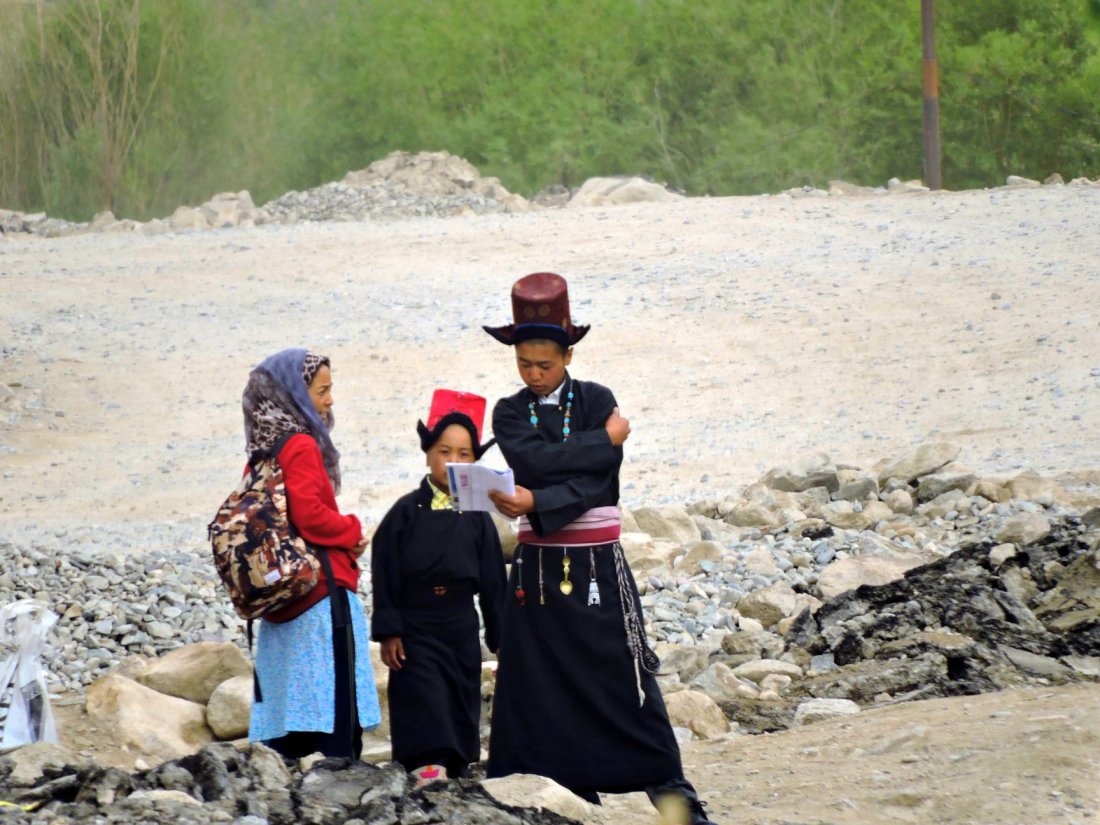
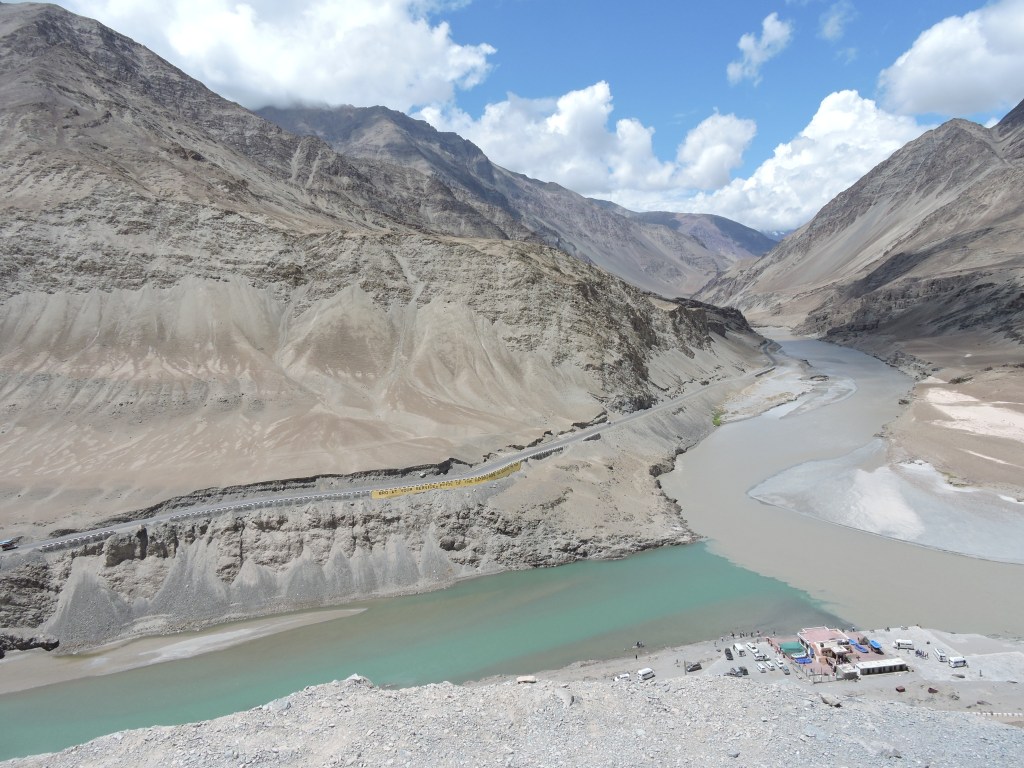
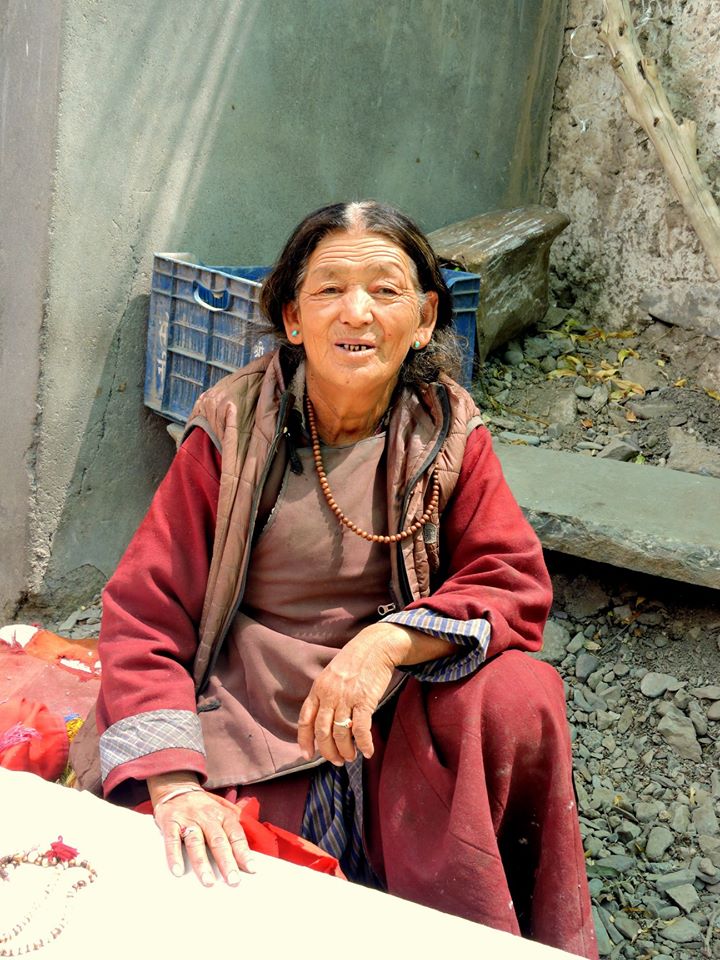
One of the first conditions of happiness is that the link between Man and Nature shall not be broken.– says Leo Tolstoy .When metropolitan souls get congested in their own smoke, they seek escape. Ladakh, or ‘the land of high passes’ is one such breathtaking getaway into the raw beauty of the mountains. Even a few years back, only some travel enthusiasts would think of visiting Ladakh. The situation has changed in recent years, with many visitors arriving each year and thus making tourism the largest industry in this region. Courtesy of harboring famous Bollywood shoots, one can also spot a number of ‘Jab tak hai Jaan’ Maggi stalls and ‘Rancho’ cafeterias across the rough passes. Yet, Ladakh’s appeal lies in its mesmerizing landscape and its cheerful, welcoming inhabitants. 

Inside this cold desert, the lofty mountains protect the valley like pillows around a sleeping infant. Clouds tease them with a game of catch-me-if-you-can. Silence here has partnered with the relentless chirping of birds, and the glacial water gurgles as it emerges as streams.  One could go on describing the beauty of Ladakh, but what’s impeccable is how humans here are an integral part of nature, – rather than being only its beneficiaries like most of us.

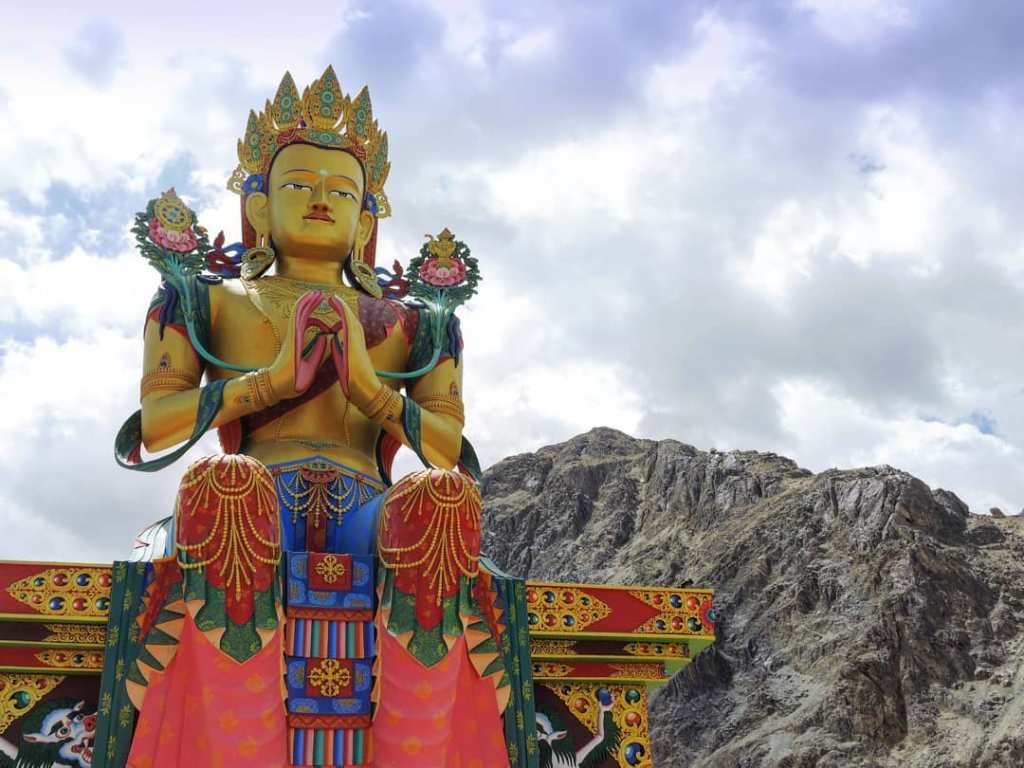
The high-held tricolors fly here as a solid string that connects this corner of the country to the mainland. Amidst the rugged terrain, men and women traverse the steep slopes mostly on foot, often asking tourists for a ride. The only modes of local transport are few plying buses between villages and high-fared cabs. Non-complying autos and rickshaws of plain lands seem like a far-fetched dream in this dreamland. Petrol pumps are few, – with just four of them along the Srinagar-Leh Highway, one in Leh and another in Diskit . Bikers mostly carry extra fuel in their pillion. Ladakh lets its tourists live in the present and distances them from instant status updates, – which is perhaps the only thankful outcome of an otherwise poor mobile network that is restricted to mostly the big towns like Leh. Inside Hunder village of Nubra , – the locals remind us that electricity visits them for only a few hours at night. Hence, most guest houses have installed solar-powered water heaters. The nearest hospital and ATM to this area lies roughly 11 kilometers away, in Diskit,- where a spectacular 106 feet tall statue of Maitreya Buddha sits prominently on top of a hill . The statue was built for the protection of Diskit Village, to prevent further war with Pakistan, and to promote world peace.

With rare precipitation and depleted ground-water levels, Ladakh occasionally suffers from acute water shortage. Guides of ‘Rancho’s School’ tell us about how they have constructed no-water ‘dry-composting’ toilets in their school, that allows natural degradation of human waste. Ironically, Ladakh also bore the brunt of flash floods in 2010 due to heavy overnight rains, which caused huge losses to human life and property.  Nevertheless, it has picked up its pieces since then. The devotion of every inhabitant towards cleanliness deserves appreciation. Concerned about plastic pollution, drivers insist that tourists leave their litter inside the car, so that they may dispose it off.  

Although Ladakh has become greener and developed than before, there is still a long way to go. Dearth of basic amenities like local transport, banks, educational institutes and health care is conspicuous. The highest mountain passes like Khardung La attract a large number of tourists including many foreigners. Yet, one fails to ignore the scarcity of usable washrooms along these arduous routes.  One may also notice the plight of migrant labourers who have left their tropical states in search of employment in this freezing land. They carve roads out of mountains, and clear the snow-laden paths. The same snow which enthralls a tourist perhaps holds no such joy to these migrants, – who light tiny pieces of rejected car-tires for a bare amount of heat.

How then are the people of Ladakh living lives that seem far away from our comfortable, air-conditioned, wifi-enabled, ola-ed and uber-ed enclosures? For starters, they are happier and content. As one of the sparsely populated regions of the country, it is heartening to see a higher status of women in Ladakh as compared to other rural parts of India. People here have embraced life and nature in one inseparable form. In spite of their daily hardships, they show utmost love and care to their visitors. One can only pray that development brings ease to their lives without dwindling with their unsullied landscape and simplicity.

In interior Nubra, as we order breakfast, we are greeted additionally with home-baked ‘khambir’ and butter tea. The innocence in these eyes puts urban complications and insecurities to utter shame. It is as if the whole ecosystem comprising of both its physical and biological elements stands out in its purest form and reminds us that we are a part of it too. It tells us to stop running endlessly, to halt,to breathe, and to exist peacefully in this totality.

🙂

-Abhipsha.

To Jewellery advertisements, With love

In the midst of an interesting Youtube video, an advertisement suddenly popped up. I looked at the caption, it was a platinum jewellery ad. A young woman was buying holiday tickets to Spain for her parents. 5 seconds passed, and assuming that this would be a breath of fresh air different from the regularised, romanticized sexism, – I did not press the skip button. The father in the ad,however, seemed sad as he commented,- “But beta, who will buy tickets for us next year?” When the daughter replies saying she will, – he again exclaims, “But you will be married. I will do your kanyadaan and then you will be of a different family.” Sitting on the other side of the laptop, I take a deep breath and finally press ‘Skip’.

My socially conditioned yet silently rebellious mind was disappointed at two things. One,- I expected platinum advertisements to be a tad bit more sophisticated than the gold ones ( but almost nothing was different,except here people spoke English instead of a vernacular). And two, I was not vehemently surprised at the course of the conversation,in fact, I was almost prepared that the subject matter won’t deviate much than expected.

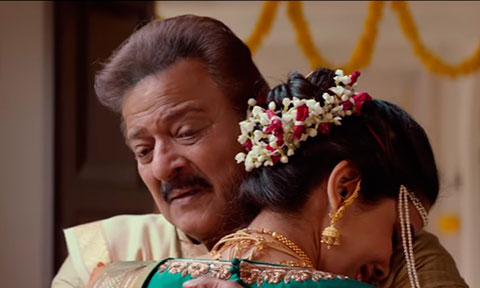
And why should I be ? Like most little girls, I have grown up in a society where fine jewellery has been the epitome of femininity that very cleverly conceals all underneath. Here,popular culture and mainstream cinema till the longest period of time has portrayed the meek,docile yet ‘ideal’ daughter-in-law,- who silently weeps as she endures intense humiliation and abuse because her father could not give enough dowry (read mostly gold) to her in laws. The bride’s father in return, pleads and begs with folded hands saying that he will arrange for more as soon as he can. “Oh, its just a film !”, – one might say. But is it ,really? Can we really believe that it is incapable of making any impression on the delicate and soft-like-wet-clay mind of a child? Probably not. I did not like it for sure, but with less consciousness than I have now. But like most others, I have seen people watch such films not with disgust,- but as an ideal weekend mode of wholesome entertainment. And most importantly,- while cinema is mostly an exaggeration,yet, one cannot deny that it is a mirror to our society. A society where ‘marrying a daughter off’ is so big a burden that it stands as a colloquial proverb for every tiresome task. A society that often portrays a woman torn between two sides, and where her status is shown to be dependent upon how rich her father is and how rich her husband will be. A society where a daughter ‘leaving’ after marriage is the most casual norm,so casual that girls grow up listening to it.

I also remember a relative’s wedding, where I was on the ‘groom’s’ side. As members of the ‘bor-jatri‘ ( groom’s family and friends whose arrival initiates the wedding), we were treated with roses at the entrance, and a little girl sprinkled perfume on my dress,while unknown people came up to me asking if I have had food. Deeply overwhelmed by the grand welcome, the 10 year old me felt bewildered. I spotted the bride’s father at a distance, watching him earnestly asking for feedback with clasped hands on whether the arrangements have been fine. In one instant, the cinema character transported itself into reality,- maybe in a more refined,non-cringey manner. Yet,that day,- I remember being upset that Almighty made me a member of this weak and helpless species,- whose fathers seemed to be at the mercy of other’s sympathy . Thankfully,many of us like me are privileged to be brought up in gender-neutral and hugely supportive homes which helps us to shatter almost all kinds of gender-stereotyping. We can educate ourselves and know many things differently than they have been preached. But while many of us grow up to introspect and search for self-esteem, a large number of women and men (current generation included) internalise everything they see. While they know how to separate the ‘good’ from the ‘bad’, and how ‘ female empowerment is crucial’, and how ‘women in their lives are precious’- they still wouldn’t dare or even want to change some ‘basic’ rules. Why meddle with everything?!- will be the most common response.

But what has all of this got to do with good old, sweet and precious jewellery, you may ask. Well. Nothing but again, everything. Since time immemorial, I have shrugged at wedding jewellery advertisements ,for they remind me that somewhere even in show and pompousness and passed-on heritage, my tribe has to accept institutionalized sadness and departure from one’s own family in exchange of glistening diamond and gold. Thankfully, we have the option of ‘skipping’ the ads now. Modern jewellery advertisements are beautiful,emotional,touchy,elegant,sometimes ‘minimal’ for the ‘new age lady’,- but beautiful and emotional nevertheless. Such smooth words that they can camouflage almost everything. Pick up any brand, and you will find actors including celebrities of high stature ‘poignantly’ portraying the pain of a father’s heart as he ‘gives his daughter away’, of the daughter torn between emotions, yet shedding tears of joy and sadness as her father expresses ‘love’ with the most exquisite jewellery. And no matter how much we try to disconnect reel versus real,- most weddings are consumerist affairs,that incur a huge lump sum of expenses,- jewellery being one of the biggest investments amongst them. While both sides of a marriage have progressively begun to share expenses, the age old portrayal of a daughter bidding goodbye to her tearful father doesn’t seem to ever change. The ‘investment’ in gold that we talk about is nothing but a smart method devised to deny a girl child the ‘ Right to Property’, something that women have achieved today with long legal battles and something that women across many communities continue to be denied of. To put it straight, precious jewellery has been the medium of cleanly disconnecting a woman from her family, while at the same time ensuring that without it, a woman is at the mercy of her in laws. It has been regularly shown as a woman’s only source of support when all goes vain,- it is her only pillar of financial strength. For old times sake,hence,it may have been the consolation prize society gave to a woman because she wasn’t allowed to follow her dreams,be educated,and earn for herself. I cannot help but talk about ‘ Goynar Baksho’, – a story of a teenage widow who after being robbed of all good things in a normal life after her husband’s death, is instead forced to be obnoxiously obsessive about her only possessions gifted by her father,- a box full of gold jewellery. Gold or any fine jewellery for that matter, thus, is one of the prime components of ‘Dowry’, – something that we have legally banned in our country but yet it continues to be all-pervasive and informally operate at various levels,cutting across all social classes.

Make no mistake, I am not against embracing femininity,- but however society defines it I choose to define and accept it as per my terms. I would readily hop into the by-lanes of Hatibagan and Esplanade to browse and buy jhumkas , but I do so because it makes me feel happy and not because it is a social norm that validates my parent’s status. Precious metals of high value have huge monetary tags attached to them and while debate may continue about how our country faces huge fiscal deficit to meet the gold demands of the nation via imports,one cannot deny that gold or platinum as a metal,like many other precious metals hold huge intrinsic value,and hence is hugely attractive to the society as a treasured investment.

Which brings me to the final question. In times when more and more women in urban as well as rural areas have become Independent or at least aspire to be so,- why demean her as the same age-old entity in popular culture? When will the brands realise that it is high time that like marriage itself, buying jewellery should be a woman’s choice, and not a necessity that her father has to fulfill as he cries at his daughter’s wedding? When will they realise that a father’s love can never be measured by chunks of expensive jewellery ,and that a parent-child bond is immortal irrespective of regressive rituals? When do we as a society realise, that in a world that aspires to be gender-neutral, marriage should no more signify the departure of a daughter from her family,but rather it should signify exactly what it comfortably does to a man?

Maybe it takes time because it is harmful to the established social structure. Maybe because it endangers the comfortable cushions of our ignorance. But I shall wait. I shall wait for the day when no social norm is specifically applicable to me only because of my gender. I shall wait for the day when ‘a woman’s farewell after marriage’ will be a dead norm that can no more be jokingly thrown about at young girls. A day when a woman and her husband taking care of her family shall no more be an anomaly,but will be normalized as it happens in the reverse manner. I shall wait for the day when all women and men can understand that while buying jewellery is a personal choice, extravagantly perpetuating it as an established norm whose burden is portrayed to be a ‘ father’s heart-wrenching responsibility’,- is not okay. Till then, Happy Women’s Day!

-Abhipsha.
The tales of Time and Friendship

Recently, my mother found some of her old school friends online. All of them saw each other through the screen after decades, with a thousand chapters of life lived in between.

Keeping up with the new age trend, they have made a Whatsapp group on which they let each other know about trivial daily stuff, -about who went where for a vacation or work, who tried out what new recipe, who dressed up like what for a wedding and other whereabouts (with pictures of course). They shower each other with compliments, leg-pulls and nostalgia. Of late, I see my mother coming home after a long day to rest peacefully with her phone and a childlike glee to participate in this group chat. This is most unusual for a woman who despises and considers almost the entire social media platform as superficial. So surprisingly, she barges in like an excited kid to say “Look! This girl was my bench-partner!” “And this one here,she was the naughtiest one who always got punished.” “And this, is Moushumi,- she was so stylish she could have been been Miss World!” I laugh at all this, both with awe and humour, and also feel amused to realise how badly they want to connect with each other with simple words and stupid forwards. Ma says that’s the thing with childhood friends, – there’s nothing to judge and they shower love without any reason.

One ponders for a second to introspect. At every stage of life, friendship is perceived differently with rising expectations at every stage. As a child, – anyone who shares a pencil or an eraser with you is a friend. Next up, the ones whom you want to do a school project with, or the ones you miss terribly on their absent days, or the ones you give extra chocolates to on your birthday and can talk to for hours,- are indeed your friends. As we grow up into adults however, most of us see ourselves in many sides of the coin. Friendships can comprise of occasional rounds of socializing with fun and frolic. It can also be about groups within a larger group or about taking sides as per needs, or something that we would rather just flow with than comprehend.

Friendship could also be the most beautiful, real thing in the world. It could be about bonds that warm up your heart like a festival and hold you tight in all situations. It could be simple and understanding with the capacity to start from the same point even after ages of distance and time. Or it could also become distant stars in the galaxy of Facebook,inspite of viewing each other’s constant status updates. And most of us feel blessed to have witnessed it all , because well, – in life one absorbs from every experience.

Maybe life gets complicated, or maybe we do. Some say we are a bunch of people so virtually connected that we can never be apart .That maybe we feel the need to talk less when we can just ‘ping’ each other anytime we want to. That maybe we are smart enough to not read and send stupid forwards, or real enough to not pass extravagant praises to someone.


But looking at Maa, it occurs as if maybe our generation has lost simplicity in the quest of being simple. Maybe we talk a lot without meaning anything. Maybe the access to a thousand modes of communication makes us unable to experience the true joy of reconnecting. Maybe we have stopped lifting each other up without any reason. Because for us, someone with too many manners comes across as fake. The rude and apparently rough person comes across as ‘ real’.

Maybe it’s time to be simple,non-judgemental and loving again. Maybe it’s time to share pencils and erasers again.

🙂

-Abhipsha Ray


বাঙালির আত্মানুসন্ধান

না, মোহনবাগান  বা ইস্ট-বেঙ্গল নিয়ে তর্কা-তর্কি করার স্পর্ধা বা ইচ্ছে,- কোনোটাই আমি রাখিনা। ঔদ্ধত্য নয়,- বরং এটা আমার ফুটবল সম্পর্কে কিছুটা অজ্ঞাত থাকার স্বীকারোক্তি বলতে পারেন। কিন্তু অল্প বয়সপ্রাপ্ত হতেই এইটুকু জেনেছি, যে মোহনবাগান মানেই ‘ঘটি’, আর ইস্ট বেঙ্গল মানে ‘বাঙাল’ । 

বাংলার বাইরে দিল্লিতে যখন পড়াশুনা করতাম,তখন ভিন্ন-ভাষীদের জনসমুদ্রে কারোর মুখে একটু বাংলা শুনতে পেলেই তাকে খুব কাছের মনে হতো। কলকাতা এসে দেখলাম,শুধু তাই দিয়ে কাজ চলে না। সরাসরি জিজ্ঞেস না করতে পারলেও,স্কুল এবং পরবর্তী জীবনের অনেক বন্ধুরাই এসে জিজ্ঞেস করেছে, “তুই কিসের সাপোর্টার? ইস্ট-বেঙ্গল না মোহনবাগান??”  বুঝতে পারতাম সে জানতে চাইছে অন্য কিছু, – ফুটবল টা ছুঁতো মাত্র। আর দেখতাম অন্য রাজ্যের বন্ধুদের এই বিভাজন-জনিত কথা কাটাকাটি তে কিঞ্চিৎ আনন্দ উপভোগ করতে। এরপর লক্ষ্য করেছি কিভাবে একে-অপরের (কু)স্বভাব/আচরণ দেখে তাকে ‘ঘটি’ অথবা ‘বাঙাল’ তকমা দিয়ে আর নাক-সিঁটকিয়ে বাঙালি খুব সন্তুষ্ট বোধ করে। আলাপ-পরিচিতির সূত্রে সে করতে চায় অন্যের ‘দেশের বাড়ির’ খোঁজ। সোশ্যাল-মিডিয়া জুড়ে একে-অন্যের ব্যঞ্জন-রান্না নিয়ে ব্যঙ্গ করতেও বাঙালির বেশ লাগে। আর ইস্ট বেঙ্গল- মোহনবাগান এর লড়াই নিশ্চয়ই বলার অপেক্ষা রাখে না । সামনা-সামনি প্রকট না হলেও,প্রচ্ছন্ন ইঙ্গিতের মাধ্যমে এই ধরণের স্বভাবে প্রায় প্রত্যেক বাঙালি-ই আবদ্ধ। 

আবার এই বাঙালি-ই বিশ্বকাপের ম্যাচে ভারত এবং বাংলাদেশের জাতীয় সংগীত শুনে আবেগে মেতে ওঠে,- ফেসবুক জুড়ে সেই ভিডিও কে সে করে তোলে ‘ভাইরাল’। ১৯০৫ সালে বঙ্গ-ভঙ্গের তীব্র প্রতিবাদে এবং অবিভক্ত বাংলার উদ্দেশ্যে রবীন্দ্রনাথ ঠাকুর রচনা করেছিলেন ‘আমার সোনার বাংলা’। যেই গানে বর্ণনা রয়েছে একই বাংলার নদীর কূল,বটের মূল এবং আমের বন-এর। তবে আজ সেই গান শুধু এক বাংলার জাতীয়তাবাদের প্রতীক। সেই পূর্ব বাংলা,- যেটি ধর্মের ভিত্তিতে ভারত থেকে বিচ্ছিন্ন হয়েও পরবর্তী কালে রুখে দাঁড়ায় নিজের ভাষার জন্যে। সেই বাংলাদেশ,- যেটি মুক্তি-যুদ্ধের লড়াই-এ ধর্মনিরপেক্ষ ভাবে জন্ম-গ্রহণ করলেও পরবর্তী কালে এবং বর্তমানে আবারও পড়েছে সেই ধর্মের-ই প্রকোপে। বিশ্বে হয়তো প্রথমবার একটি জাতি স্বপ্ন দেখেছিল শুধু মাত্র ভাষার ভিত্তি-তে দেশ গড়ার। কিন্তু ভাষা আমাদের এক রাখতে পারেনি,- এটাই নির্মম সত্য। শেষ-মেশ জয় হয়েছে সেই দ্বি-জাতি তত্ত্বেরই। তাই কবিগুরুর সোনার বাংলা আজ বিভক্ত। দ্বিখন্ডিত আজ সেই রূপসী বাংলা, – যার মুখ দেখে আরেক কবি পৃথিবীর রূপ-ও আর খুঁজতে যেতে চাননি। 

তবে এ তো হল বাংলাদেশের কথা। এবার আসি ভারতে। যেই ভারতের পরাধীনতার শৃঙ্খল ভীষণ ভাবে নাড়া দেয় রাঢ় বাংলার বিপ্লবী কবি,এবং পরবর্তী কালে বাংলাদেশের জাতীয় কবি,- কাজী নজরুল ইসলাম কে। সেই ভারত,যার স্বাধীনতার  উদ্দেশ্যে চট্টগ্রাম-এর এক স্কুল শিক্ষক নিজের সর্বস্ব উজাড় করে দিয়েছিলেন,- মৃত্যুক্ষণেও যাঁর উপর অমানবিক অত্যাচার চালান ইংরেজ-রা। ইউ-টিউবে একদিন খুঁজে দেখেছিলাম, আজ সেই মাষ্টারদার বাড়ি পরিণত হয়েছে বাংলাদেশের এক ছোট কমিউনিটি হেলথ ক্লিনিকে,- যার তাৎপর্য্য আশে-পাশের বেশিরভাগ মানুষ-ই জানেন না। এমনই বীরত্বের প্রতীক হয়ে ওঠেন সুভাষ বসু, বাঘা-যতীন,কল্পনা দত্ত,প্রীতিলতা,ক্ষুদিরাম,বীণা দাশ,রাসবিহারী বসু এবং আরো অনেকেই,-যাঁরা নিজেদের পরিচিতি বাঙালির চেয়েও বেশি,- ভারতীয় হিসেবে রাখতে গর্ববোধ করতেন। ভারতের স্বাধীনতা আন্দোলনের ইতিহাসে যাঁরা কেউই তাঁদের উচিত মর্যাদা পান নি। 

কিন্তু আজ ভারতের বাঙালি কোথায় দাঁড়িয়ে? আজ কি সে এই মহামানবদের ভারতীয় ভাবে? নাকি ভারতীয় তো পরের কথা, সে এখন তাঁদের  আর বাঙালি ও ভাবতে পারেনা? ইস্ট-বেঙ্গলের শতবর্ষ পূর্তির আনন্দ কে অনেকেই দেখলাম ব্যক্ত করেছেন সূর্য সেন,জীবনানন্দ দাশ আর সত্যজিৎ রায়ের নাম জড়িয়ে। মোহনবাগান হলে নিশ্চয়ই মহান ‘ঘটি’দের নাম তোলা হতো। যাঁরা বাংলা এবং ভারত কে ভালোবেসেছে প্রাণের চেয়েও বেশি,- তাদের সাথে এ কি রকম ভাগ্যের পরিহাস! 

না,আবারো বলি,আমি কোনো দলেরই খেলাটির প্রতি আবেগ বা ভালোবাসা কে ছোট করছিনা। গর্বের সাথে দুই টিমের খেলোয়াড় দের জানাই আমার শুভেচ্ছা, এবং আশা রাখি তাঁরা বাঙালির ফুটবল-প্রেম কে আন্তর্জাতিক স্তরে  নিয়ে যাবেন। কিন্তু খেলা কে খেলার পর্যায়েই রাখুন। নিজেদের বিভক্ত করে এই জাতির ইতিহাস এবং মহাপুরুষদের ছোট করবেন না,দোহাই। গর্ব করুন বাঙালির সারল্য নিয়ে,- যা পথের পাঁচালীর গ্রাম বাংলায় আবহমান। গর্ব রাখুন গুপী-র সেই গানের ভাষায়,- যার মিষ্টতায় শুন্ডী -র রাজা বিস্মিত হন। গর্ব করুন রবি ঠাকুরের  ‘দেখে দেখে আঁখি না ফিরে…’, – সেই  সুসজ্জিত বাংলায়। গর্ব করুন নেতাজি এবং মাষ্টারদার বিশ্ব-কাঁপানো দেশপ্রেম এবং স্পর্ধায় । 

-অভীপ্সা রায় ।